








How to Choose the Perfect Suit for Your Body Type

Introduction
A well-fitted suit can completely transform the way you look and feel. Whether you’re attending a wedding, a job interview, a church event, a business meeting, or a special celebration, the right suit helps you project confidence, professionalism, and style.
Unfortunately, many men buy suits based solely on color or price without considering how the suit fits their body type. Even an expensive suit can look unflattering if the fit is wrong.
In this guide, we’ll show you how to choose the perfect suit for your body type so you can look your absolute best.
Why Fit Matters More Than Price
Many people assume that a more expensive suit automatically looks better. In reality, fit matters far more than price.
A properly fitted suit:
- Enhances your appearance
- Improves comfort
- Makes you appear more confident
- Creates a professional image
- Helps you look taller and more proportioned
The first thing people notice about a suit is not the brand—it is how it fits.
Understanding Common Body Types
Most men fall into one of the following body categories:
Slim Build
Characteristics:
- Narrow shoulders
- Lean frame
- Smaller chest
Best Suit Choice:
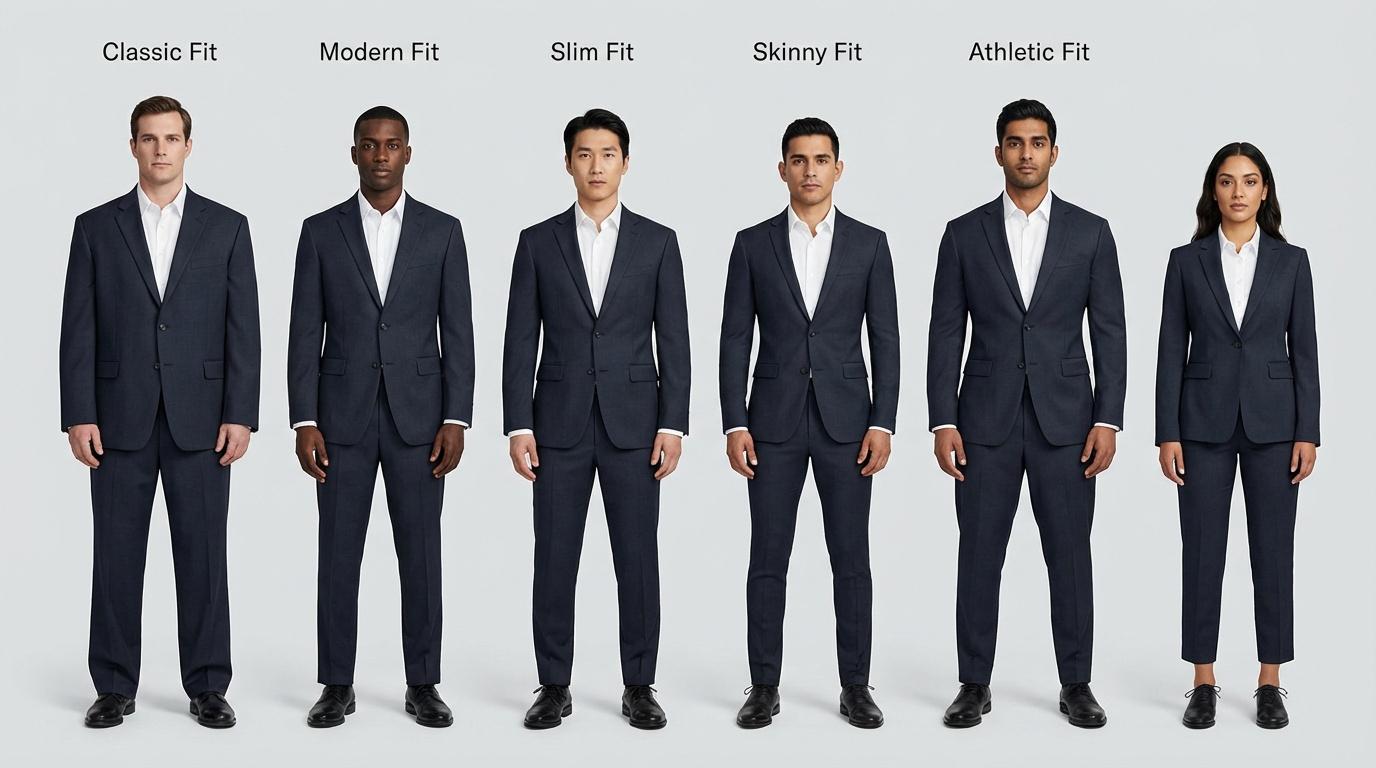
- Slim-fit suits
- Light shoulder structure
- Single-breasted jackets
- Tapered trousers
Avoid:
- Oversized jackets
- Extremely loose pants
Slim-fit suits help create a clean, modern silhouette while maintaining proportion.
Athletic Build
Characteristics:
- Broad shoulders
- Narrow waist
- Well-defined physique
Best Suit Choice:
- Tailored-fit suits
- Slightly tapered trousers
- Structured jackets
Avoid:
- Very tight jackets
- Excessively slim trousers
Athletic men often need suits that accommodate broader shoulders without creating excess fabric around the waist.
Broad or Heavy Build
Characteristics:
- Larger chest
- Wider waist
- Fuller frame
Best Suit Choice:
- Classic-fit suits
- Single-breasted jackets
- Straight-leg trousers
- Darker colors
Avoid:
- Skinny-fit styles
- Excessive patterns
- Tight jackets
The goal is to create clean vertical lines that provide balance and comfort.
Tall Men
Characteristics:
- Long torso
- Long legs
Best Suit Choice:
- Double-breasted suits
- Wider lapels
- Layered styling
Tall men can successfully wear styles that may overwhelm shorter men.
Shorter Men
Characteristics:
- Shorter frame
- Compact proportions
Best Suit Choice:
- Single-breasted suits
- Slim lapels
- Slightly tapered trousers
- Minimal breaks in trousers
Avoid:
- Oversized jackets
- Baggy trousers
- Large patterns
These choices help create the appearance of height and proportion.
Key Areas That Determine Suit Fit
Shoulders
The shoulder area is the most important part of a suit.
The seam should sit exactly where your shoulder naturally ends.
If the shoulders are too large or too small, alterations become difficult and costly.
Jacket Length
A properly fitted jacket should cover your seat and create a balanced appearance.
A jacket that is too short can look trendy but often appears incomplete.
Chest
You should be able to comfortably button the jacket without pulling or strain lines.
If the fabric stretches across your chest, the jacket is too small.
Sleeves
Your shirt cuff should extend approximately half an inch beyond the jacket sleeve.
This small detail significantly improves the overall appearance.
Trousers
Your trousers should sit comfortably at your waist and lightly rest on your shoes.
Excess fabric creates a sloppy appearance, while trousers that are too short can look awkward.
Choosing the Right Suit Color
Navy Blue
The most versatile suit color.
Perfect for:
- Business meetings
- Weddings
- Church
- Job interviews
Charcoal Grey
Professional and sophisticated.
Perfect for:
- Corporate environments
- Formal occasions
Black
Ideal for:
- Formal events
- Evening occasions
- Funerals
Light Grey
Excellent for:
- Spring events
- Summer weddings
- Daytime celebrations
Common Suit Buying Mistakes
Many men make these mistakes:
- Buying based only on price
- Choosing the wrong size
- Ignoring shoulder fit
- Selecting trendy styles that won’t last
- Forgetting proper alterations
A few simple adjustments can make a suit look custom-made.
Why Professional Assistance Matters
Finding the perfect suit is easier when you receive guidance from experienced professionals.
At JEVGLAM, we help customers select suits based on:
- Body type
- Occasion
- Personal style
- Budget
- Fit preferences
Our goal is to help every customer leave looking confident and well-dressed.
Frequently Asked Questions
What is the most versatile suit color?
Navy blue is generally considered the most versatile suit color because it works for both formal and professional occasions.
Should a suit be tight or loose?
A suit should fit comfortably without feeling restrictive. It should follow your body’s natural shape without excess fabric.
Can a suit be altered?
Yes. Many aspects of a suit can be altered, including sleeves, trouser length, and waist adjustments.
How many suits should a man own?
A good starting point is three suits:
- Navy blue
- Charcoal grey
- Black
These colors cover most occasions.
Conclusion
The perfect suit is not necessarily the most expensive one—it is the one that fits your body correctly and makes you feel confident. By understanding your body type and paying attention to fit, you can build a wardrobe that helps you look sharp for every occasion.
Visit JEVGLAM
Looking for a suit in Edmonton? Visit JEVGLAM for a selection of men’s suits, dress shoes, shirts, and accessories designed to help you look your best for every occasion.